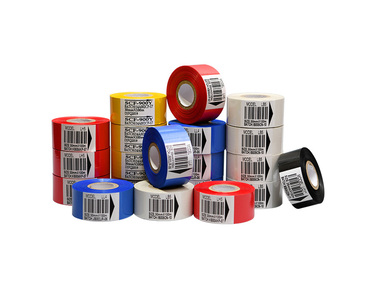
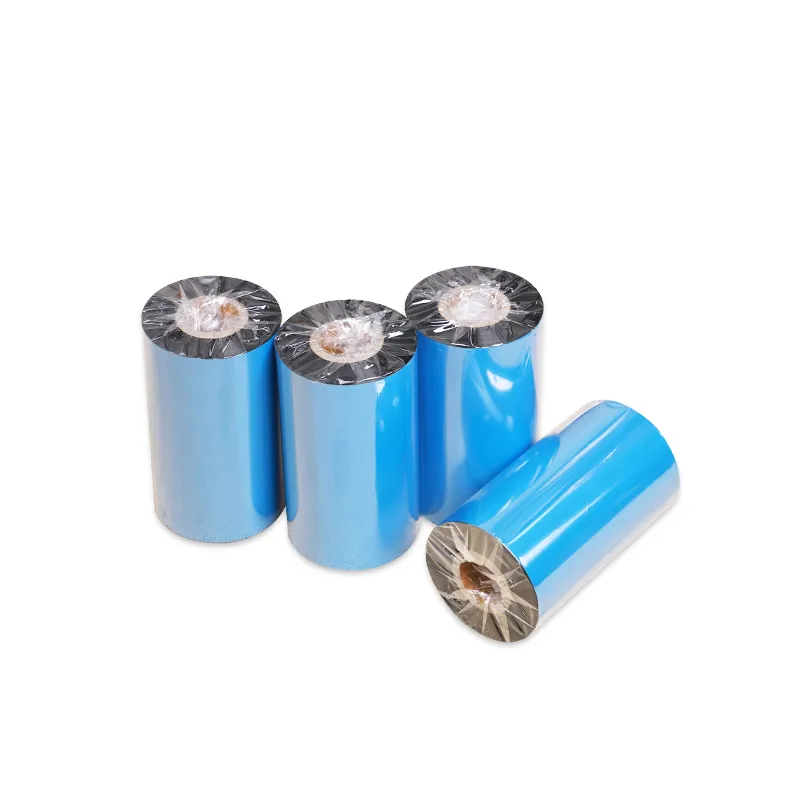
As a core consumable for thermal transfer printing technology, a carbon ribbon is a polyester film coated with wax-based, resin-based, or mixed-based ink. It transfers ink to the surface of substrates such as labels and tags through the heating element of a thermal transfer printer, forming clear, wear-resistant, and stain-resistant printed patterns or text. Though seemingly small, it plays a crucial role in multiple industries including logistics, manufacturing, retail, and healthcare, directly affecting the durability and readability of printing results.
In terms of material classification, carbon ribbons are mainly divided into three types: wax-based carbon ribbons, resin-based carbon ribbons, and mixed-based carbon ribbons. Wax-based carbon ribbons use paraffin as the main ink component, featuring low cost and fast printing speed. They are suitable for general scenarios such as paper labels and tags, making them the first choice for batch printing of logistics waybills and supermarket price tags. Resin-based carbon ribbons adopt polymer resin as the core component, with extremely strong ink adhesion, scratch resistance, alcohol resistance, and high-temperature resistance. They are suitable for synthetic material labels such as PET and PP, and are widely used in fields with high requirements for label durability, such as electronic components, medical devices, and auto parts. Mixed-based carbon ribbons combine the advantages of wax-based and resin-based ribbons, balancing cost and durability. They are suitable for universal printing on both paper and synthetic materials, serving as the “all-purpose consumable” in manufacturing and retail industries.
The core characteristics of carbon ribbons directly determine printing quality: ink adhesion determines whether labels can remain clear in harsh environments, scratch resistance ensures labels do not fall off or blur during logistics and transportation, and printing resolution affects the readability of tiny texts or barcodes (mainstream carbon ribbons support 300-600 DPI high-definition printing). In addition, the length and width of the carbon ribbon need to match the label and printer model. High-quality carbon ribbons also have the characteristics of environmental friendliness, no odor, uniform ink, and resistance to breakage, which can effectively extend the service life of the printer head.
In practical applications, the selection of carbon ribbons should follow the “material matching” principle: paper labels are paired with wax-based carbon ribbons, synthetic material labels with resin-based carbon ribbons, and mixed-based carbon ribbons are used for complex scenarios. For example, the express logistics industry uses wax-based carbon ribbons to print waybills, balancing efficiency and cost; electronic factories use resin-based carbon ribbons to print chip labels, resisting high temperatures and friction during production; supermarkets use mixed-based carbon ribbons to print food price tags, adapting to both paper tags and the humidity of refrigerated environments.