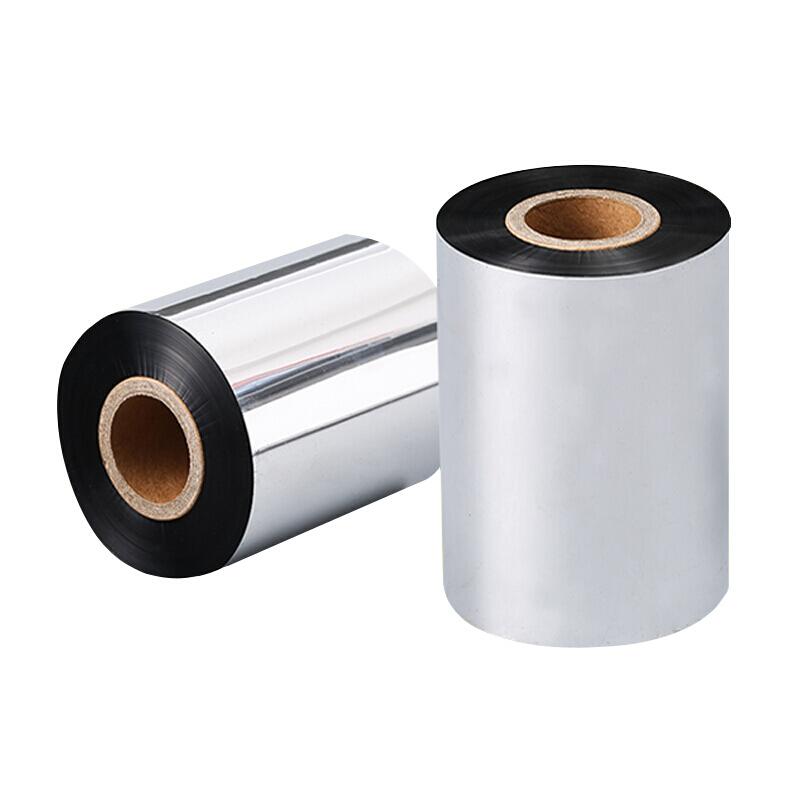
Carbon ribbons, also known as heat transfer ribbons are key consumables for devices such as barcode printers and are essentially a polyester (PET) film coated with molten ink and a functional material composed of a heat-resistant protective layer on the back.
Its core function is to transfer the ink precisely to the surface of the substrate such as labels and bills under the action of temperature and pressure to form clear and durable text, barcodes or images through heat transfer technology. High-quality carbon bands not only produce high-resolution printing results, but also reduce wear on the head and extend the life of the equipment, while poor quality carbon bands may cause the ink to disperse, fall off, and even damage the printing components. As a core medium connecting printing equipment and marking carriers, carbon bands have become indispensable basic consumables in fields such as logistics traceability, medical management, and industrial manufacturing.
According to the composition of the coating materials, carbon bands are mainly divided into three categories, each adapted to different application scenarios, forming a differentiated competitive pattern:
1. Wax-based carbon band: With wax raw materials as the main component (accounting for a high proportion), with a low melting point and small printing energy consumption, it is the most economical option, costing only 1-1.8 yuan per square meter. It is mainly used for rough paper tags such as coated paper, wheat straw paper, etc. It is suitable for mass low accuracy printing such as logistics sheet, retail price tag and so on. However, the scratch resistance to natural weathering is weak, so it is not suitable for smooth materials such as PET film.
2. Mixed carbon band: Blend 20% -30% of resin components with wax raw materials, taking into account economy and durability, and the price is about twice that of wax-based carbon band. Through the nano coating and other technical upgrades, its wear resistance is 40% higher than wax-based products, suitable for smooth surface of paper or film labels, widely used in medical device identification, electronic components label, new energy resources auto parts tracing and other high-end scenes. The market size reached 2.16 billion yuan in 2024, and it is expected to exceed 4.5 billion yuan by 2030, accounting for 31.2%, becoming one of the fastest growing segments.
3. Resin-based ribbon: high proportion of resin composition, printing requires higher energy levels, with high temperature (up to 260C), chemical resistance, scratch resistance excellent characteristics, the highest print resolution of 600dpi. The price is 3 times that of wax-based ribbon, mainly used for special material labels such as PET, PP, etc., suitable for extreme environmental needs such as aerospace part identification, automotive VIN code, chemical product packaging. With the implementation of halogen-free environmental standards, its demand in the electronics manufacturing industry will be an ongoing outbreak, 2024-2030 average annual growth rate of 12.8%.
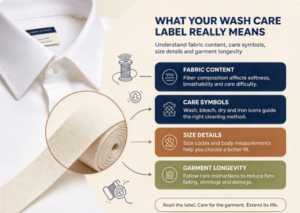
In addition, water mark printing for the clothing, shoe and hat industries has also derived special resin-based carbon bands that can withstand repeated water washing and high temperature ironing, meeting the durability requirements of cleaning markings.
The performance of the carbon belt is determined by its three-layered structure in concert, with a clear division of labor among the components:
· Base film (carrier): usually 4.5μm thick polyester film, determines the thermal conductivity and tensile strength of the ribbon, directly affecting the print stability;
· Ink coating (internal coating): The core functional layer consists of pigments, resins, waxes, additives, etc. The black carbon band ink contains carbon powder, which is also the name of the “carbon band,” and its formulation determines the reprint temperature, print clarity and durability;
· Heat resistant coating (back coating): Special materials applied to the back of the substrate film to reduce the friction of the print head, prevent static generation, optimize thermal conduction, directly protect the print head and extend its service life.
When working, the heat transfer head is instantly heated, and the heat is transferred to the ink coating through the heat resistant coating and substrate film, so that the ink is melted and precisely transferred to a substrate surface to form a stable graphic identification. After high-quality carbon band reprinting, the heated part does not remain ink, ensuring clean head and consistent print quality.
The application scenario of carbon belt has penetrated into many areas of the national economy, and demand growth is significantly driven by industrial upgrading and policy:
1. Logistics industry: the largest application area, with a market size of 5.8 billion yuan in 2024, accounting for 42%. With the increase of electricity permeability to 45% and the acceleration of intelligent warehousing construction, the demand for anti-UV and friction-resistant carbon strips has increased by more than 12% annually, which is used for express delivery and logistics packaging traceability labels;
2. Healthcare: Driven by the traceability requirements of the drug administration law, the market size reached 2.1 billion yuan in 2024, with an annual growth rate of 18%. It is mainly used for drug traceability labeling and medical file printing, and the demand potential of anti-counterfeit carbon belts is outstanding, and is expected to grow by 15% annually.
3. Electronics manufacturing: Benefiting from the Industrial Internet of Things and the upgrading of environmental standards, the demand for halogen-free resin-based carbon belts has increased, for electronic component labels, product environmental identification, and suitable for high temperature welding.
4. Other fields: price tag printing in retail industry, identification of wind turbine blade in new energy resources industry, component traceability in aerospace industry, etc., have further broadened the application boundary of carbon ribbon, and promoted the development of products in the direction of high performance and customization.